
Rayvolve by AZmed
A second read, without a second workflow.
Rayvolve analyses standard X-rays and can return clinical decision-support results to the reading environment used by radiologists and emergency physicians.
Developed by French medical-imaging AI company AZmed, Rayvolve brings several X-ray applications together in one suite. The reader remains responsible for interpretation; the AI is there to support detection, prioritisation and repeatable quantitative work.
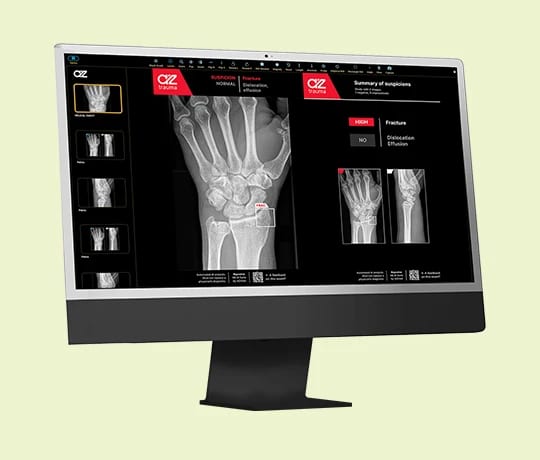
The Rayvolve AI suite
Rayvolve's areas of X-ray support.
Rayvolve groups specialised applications around the examinations and repetitive tasks clinicians actually encounter. The portfolio shown here reflects AZmed's global Rayvolve suite; regulatory availability and intended use vary by jurisdiction.
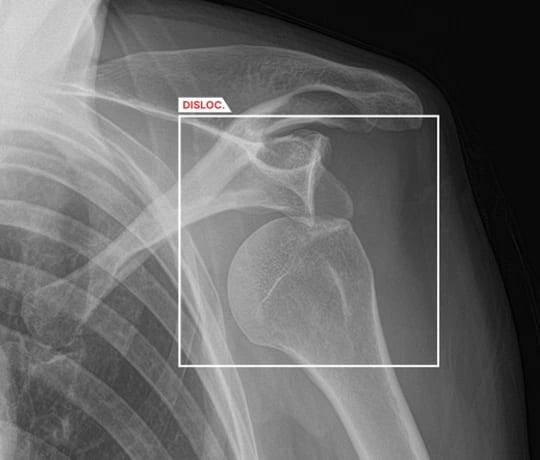
AZtrauma
AI support for detecting and localising fractures, dislocations and joint effusions on X-rays, helping readers focus attention where findings may be easy to miss.
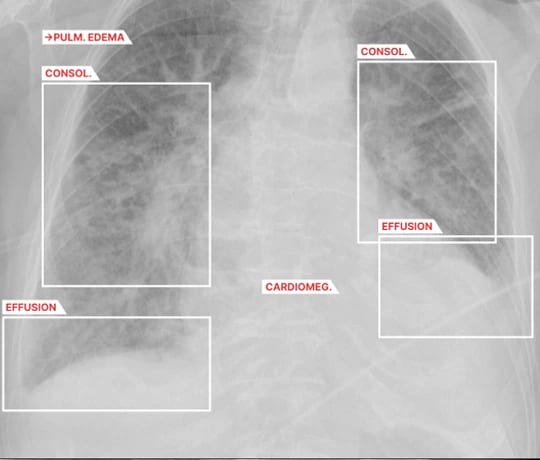
AZchest
AI analysis of chest radiographs across thoracic findings involving the lungs, heart and ribs, with detection and triage capabilities within the global suite.
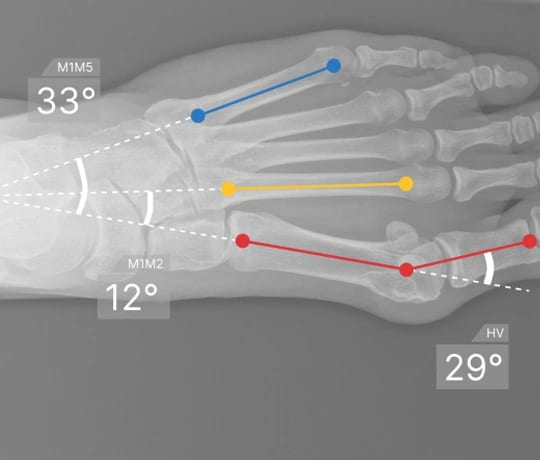
AZmeasure
Automated osteo-articular measurements for lengths and angular relationships, reducing repetitive manual measurement work while keeping the result available to the reader.
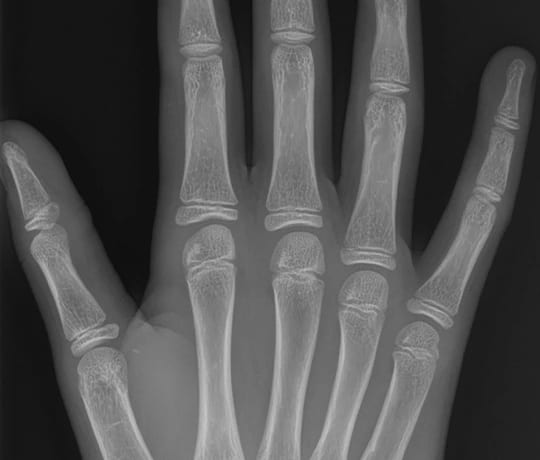
AZboneage
Automated skeletal-maturity assessment from paediatric hand radiographs using the Greulich and Pyle reference method, with comparison to chronological age where available.
Global Rayvolve product scope shown. Ask Healthinc to confirm the modules and indications currently available for your jurisdiction and intended use.
Workflow first
AI results within your existing radiology reading workflow.
Rayvolve is designed to integrate with existing radiology environments rather than become another place clinicians have to visit. AZmed positions the suite for PACS and radiology-workflow integration, with AI results returned where the reader is already working.
Healthinc helps with image routing, interfaces, network and security requirements, testing, rollout and support to integrate Rayvolve with your existing systems.
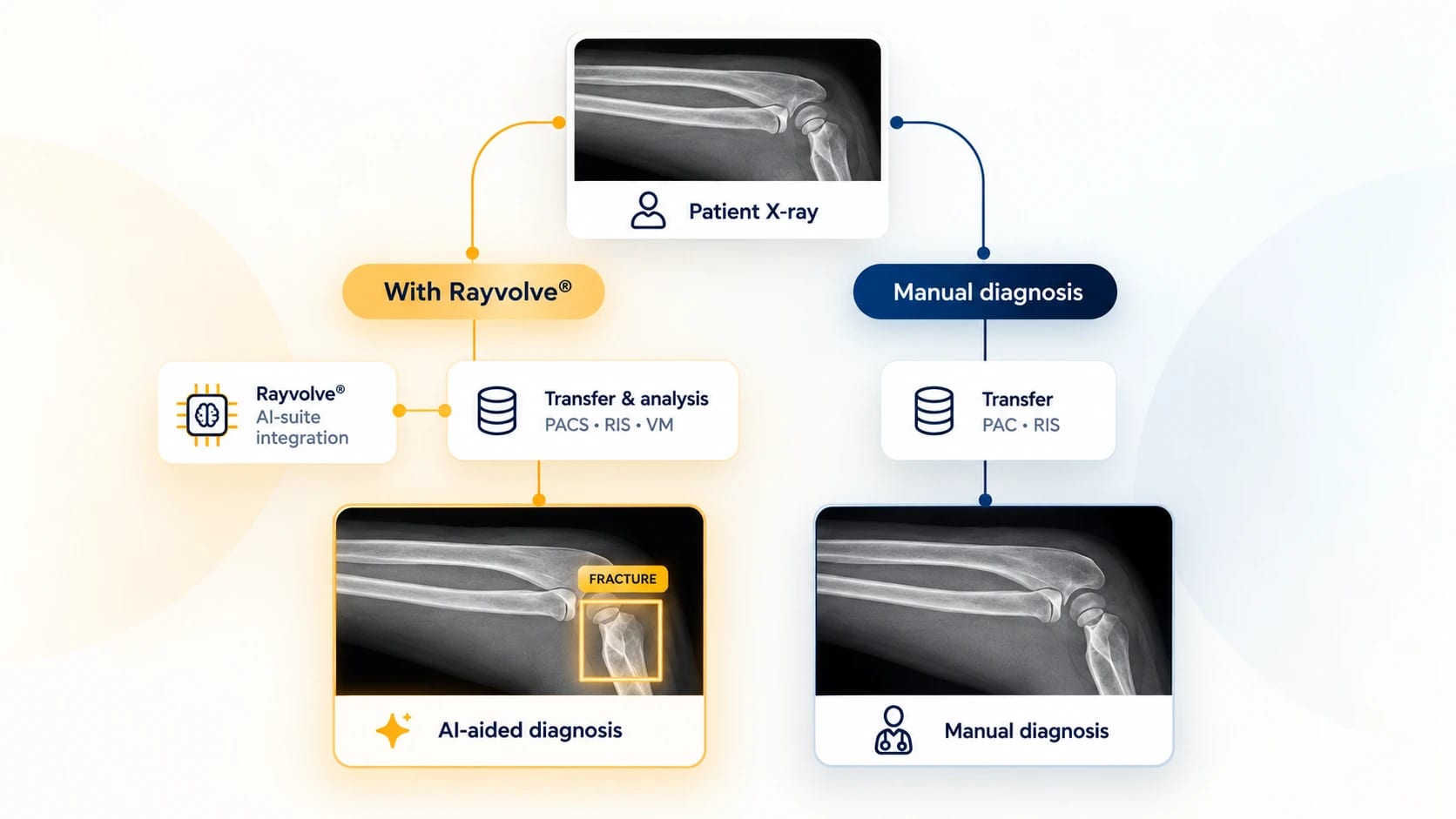
The appropriate X-ray is made available to the AI workflow.
The selected Rayvolve capability processes the examination.
Decision support is brought back into the clinical reading environment.
Clinical evidence
Published clinical evidence.
AZmed publishes a growing body of peer-reviewed and multicentre evidence for Rayvolve. Its 2026 worldwide evaluation assessed the complete radiographic AI suite across 258,373 X-rays from 100 medical centres in 26 countries.
These are AZmed's international evidence and deployment figures, not Healthinc customer claims. Healthinc focuses on the local integration, implementation and support around the product.
Australia and New Zealand
Choose the clinical use case, then plan the integration.
In Australia, Rayvolve is included in the Australian Register of Therapeutic Goods as a Class IIa medical device under ARTG 470185. The current entry covers specified fracture-detection, bone-measurement and bone-age indications on standard X-rays.
Rayvolve's global portfolio is broader than a single regulatory entry. Module availability, intended use and regulatory status vary by country and can change over time, so Healthinc will confirm the current scope for the exact use case before implementation.